Published Work
Corporate Political Connections and Favorable Environmental Regulation
We examine whether the Environmental Protection Agency (EPA) uniformly enforces the Clean Air Act for politically connected and unconnected firms using a close election setting. We find no difference in regulated pollutant emissions or EPA investigations between the two groups, though connected firms experience less regulatory enforcement and lower penalties.
DOI: 10.1287/mnsc.2020.3931
Research Design
We employ a Regression Discontinuity Design (RDD) exploiting close U.S. congressional elections where the margin of victory is less than 5%. This framework causally compares firms connected to politicians who narrowly won with those connected to politicians who narrowly lost, isolating exogenous variation in firms' political networks. We analyze two stages of EPA enforcement: (1) EPA investigations into potential Clean Air Act violations, and (2) enforcement actions and penalties. Our sample spans 1980–2010, combining EPA's Integrated Compliance Information System (ICIS) data, Federal Election Committee (FEC) contribution records, Compustat financial data, and Toxics Release Inventory (TRI) emissions data.
Key Results
We find no significant difference in regulated pollutant emissions or in the number of EPA investigations between politically connected and unconnected firms. However, connected firms are significantly less likely to incur environmental penalties and realize smaller fines. These effects are stronger when firms are connected to politicians with greater ability to influence regulators (majority party members, party leadership, high seniority, seats on environment/energy committees) and when the connected firms are more important to their supported politicians (same-state headquarters, crucial industries by sales or employment, top campaign donors). The results suggest that campaign contributions can indirectly benefit firms through reduced regulatory enforcement rather than through changes in actual pollution behavior.
Key Figures & Tables
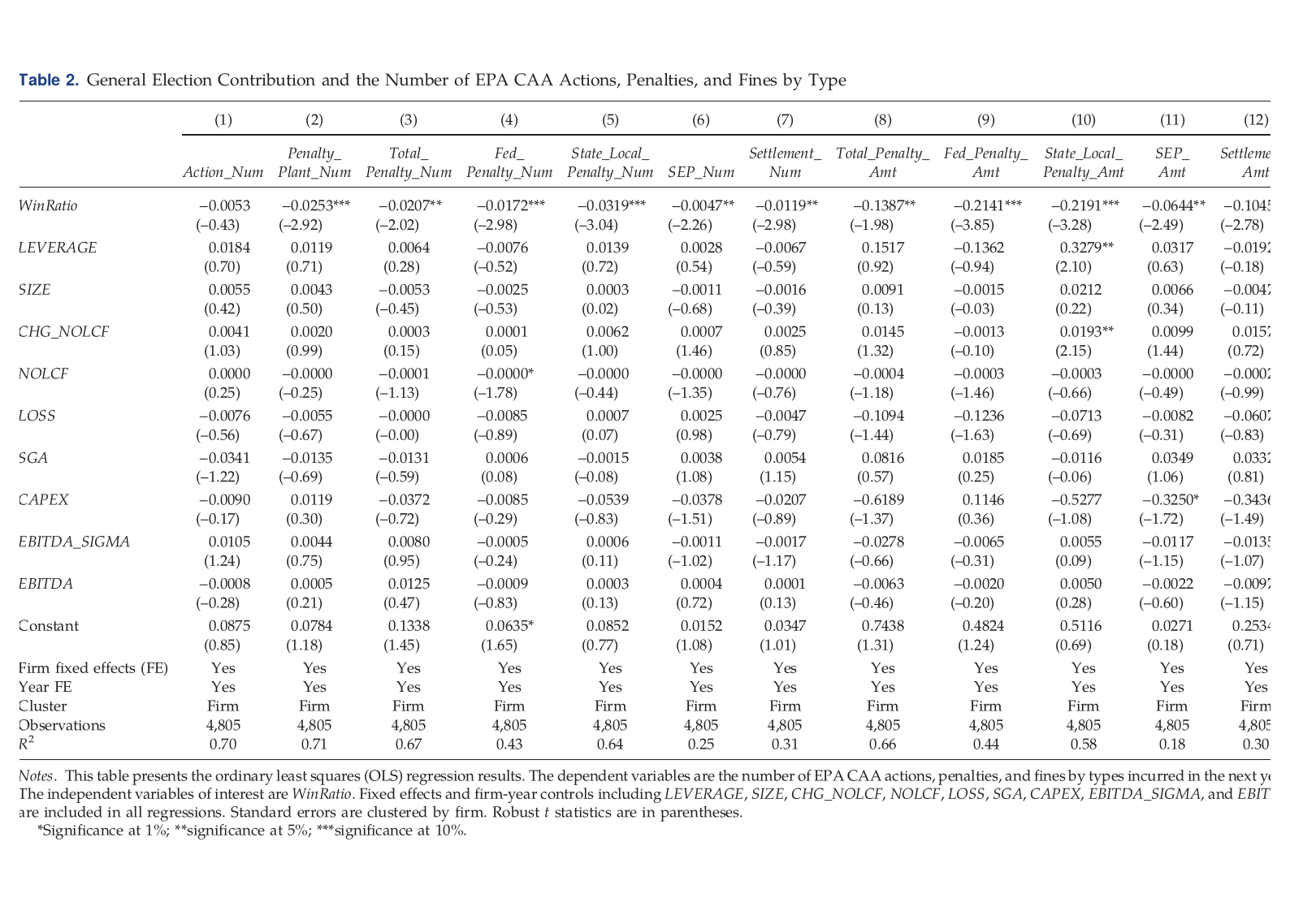
Table 2: Political connections and EPA enforcement outcomes
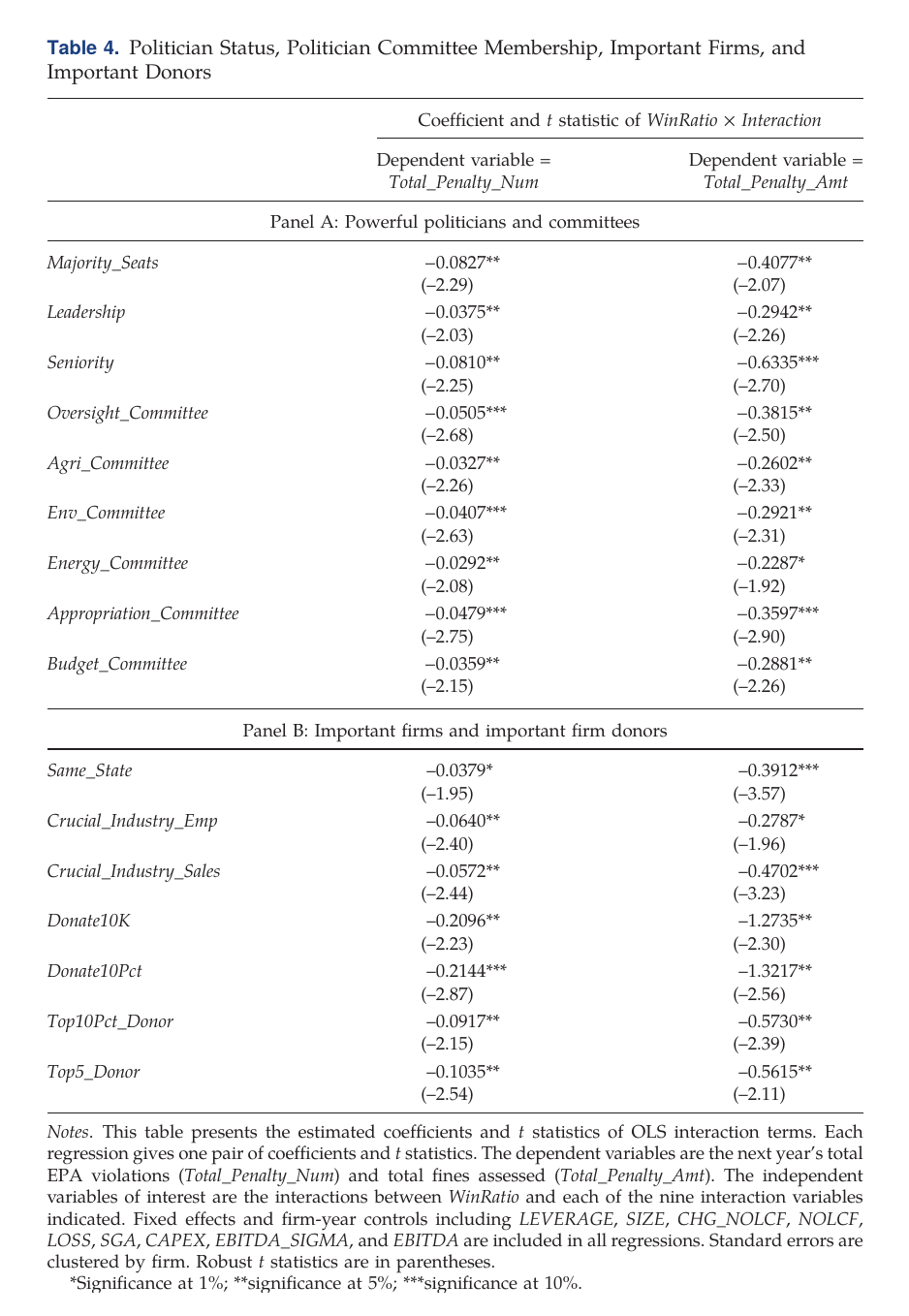
Table 4: Politician power and firm importance channels
The Role of Financial Constraints in Firm Investment under Pollution Abatement Regulation
This paper empirically analyzes pollution abatement regulation within the context of the Clean Air Act and shows that financial constraints are an important determinant of whether mandatory pollution abatement crowds out or stimulates R&D investment and capital expenditure.
DOI: 10.1016/j.jcorpfin.2022.102252
Research Design
This paper empirically analyzes pollution abatement regulation within the context of the Clean Air Act (CAA). We examine how firms' financial constraints interact with mandatory pollution abatement requirements to shape R&D investment and capital expenditure decisions. The empirical framework uses plant-level EPA emissions and enforcement data merged with Compustat financial data. Financial constraints are measured using standard proxies including the KZ Index, firm size, dividend payout, and credit ratings. The analysis exploits variation in the stringency of CAA nonattainment designations across counties and over time to identify the causal effect of pollution abatement pressure on investment outcomes, and then interacts this pressure with measures of financial constraints.
Key Results
We find that financial constraints are a critical determinant of whether mandatory pollution abatement crowds out or stimulates firm investment. Financially unconstrained firms respond to increased pollution abatement pressure by significantly increasing R&D investment and capital expenditure, consistent with a "Porter Hypothesis" mechanism where regulatory pressure stimulates innovation. In contrast, financially constrained firms experience a crowding-out effect, where mandatory abatement expenditures displace R&D and capital investment. The results are robust to alternative measures of financial constraints and pollution abatement pressure. These findings highlight the importance of considering firm heterogeneity in financial conditions when designing and evaluating environmental policies.
Key Figures & Tables
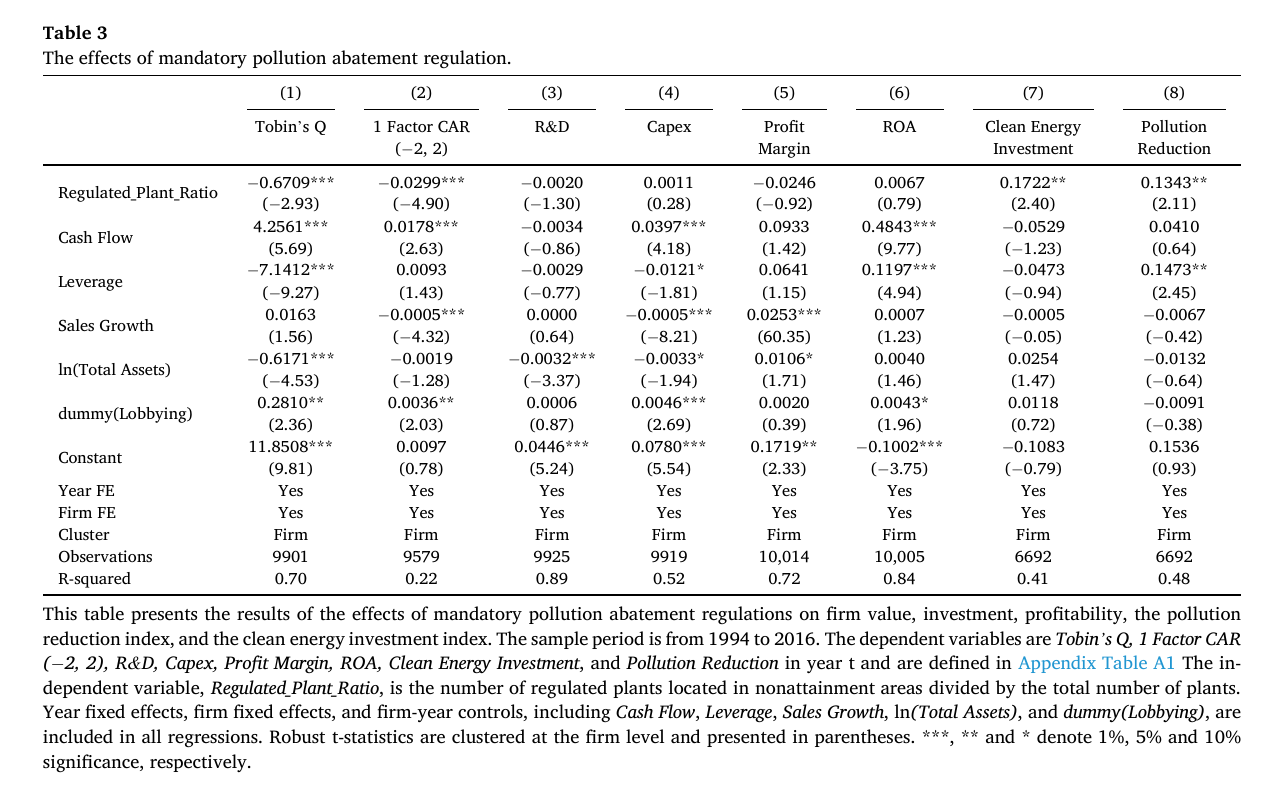
Table 3: Baseline effects of mandatory pollution abatement regulation
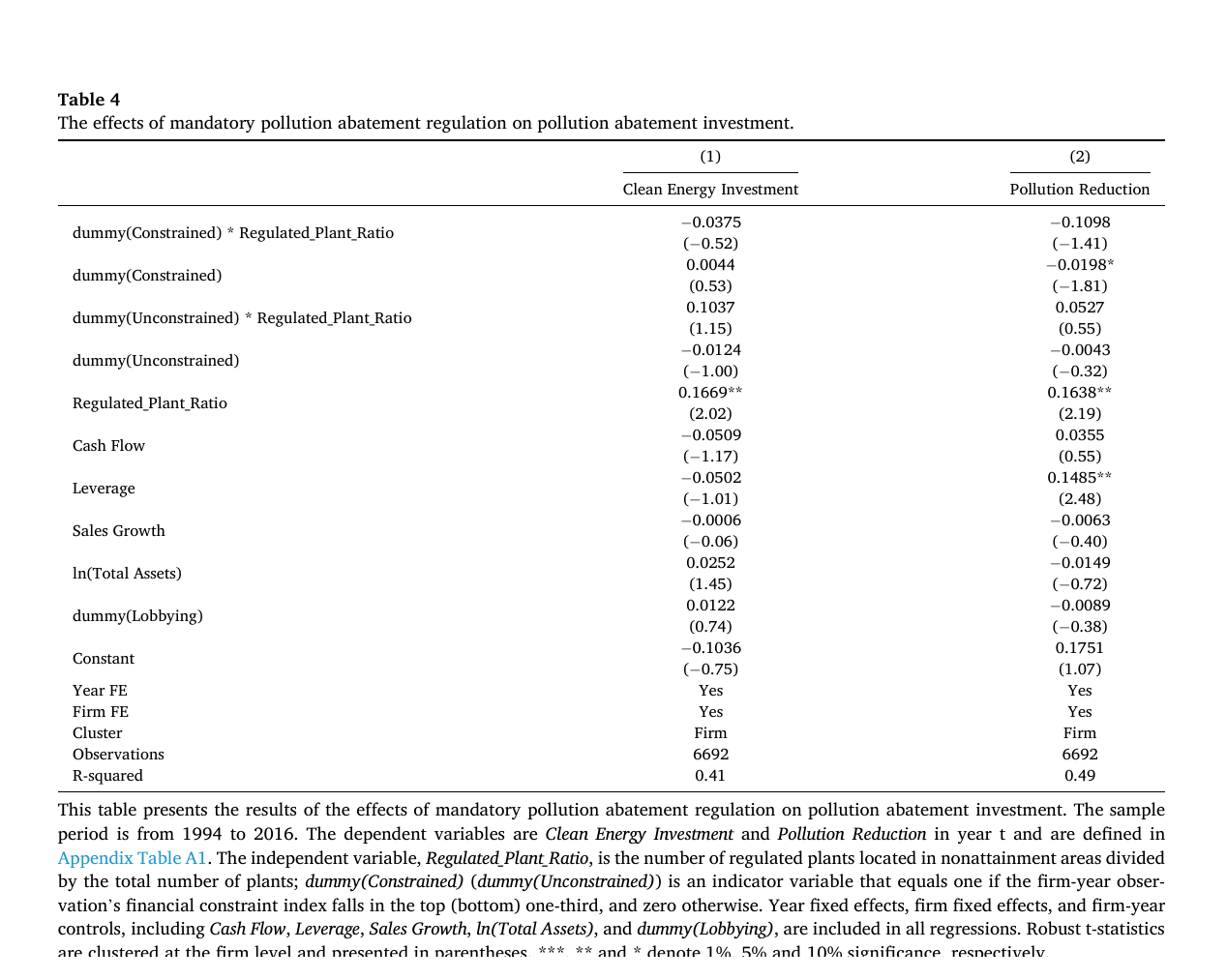
Table 4: Pollution abatement investment under financial constraints
The Power of the People: Labor Unions and Corporate Social Responsibility
We study the causal impact of unionization on stakeholders by analyzing how close labor union elections affect environmental and social (E&S) scores. We find that unionization is associated with an increase in internal social scores that primarily benefit employees and a decrease in external E&S scores that primarily benefit non-employees.
DOI: 10.1093/rof/rfae018
Research Design
We construct ten yearly, firm-level environmental and social (E&S) scores using the Thomson Reuters ASSET4 ESG database (2002–2021), which contains 70 environmental and 78 social indicators. These include four internal social scores primarily benefiting employees (Employment Quality, Training & Development, Diversity & Opportunity, Health & Safety) and six external scores primarily benefiting non-employees (Emissions Reductions, Resource Reductions, Product Innovation, Community Involvement, Human Rights, Product Responsibility). We analyze year-over-year percentage changes in these scores. To establish causality, we implement a Regression Discontinuity Design (RDD) using close NLRB union elections where the vote margin is less than 20%. We further augment the analysis with real outcome variables: worker injury rates and toxic gas emissions.
Key Results
Our RDD estimates show that union election victories lead to a 16.7% increase in diversity score changes and a 5.7% reduction in emission score changes, with larger magnitudes when using quadratic polynomial specifications. The divergence between internal and external scores is amplified when firms face greater financial constraints (measured by the KZ Index), suggesting resource reallocation from external stakeholders toward employees. Furthermore, the effects are magnified when unions have more bargaining power: in states without right-to-work laws and when local employment rates are high. Real outcomes confirm this pattern: unionization is associated with fewer worker injuries but increased emissions of certain toxic gases. These findings indicate that empowering one stakeholder group (employees) does not necessarily benefit all stakeholders.
Key Figures & Tables
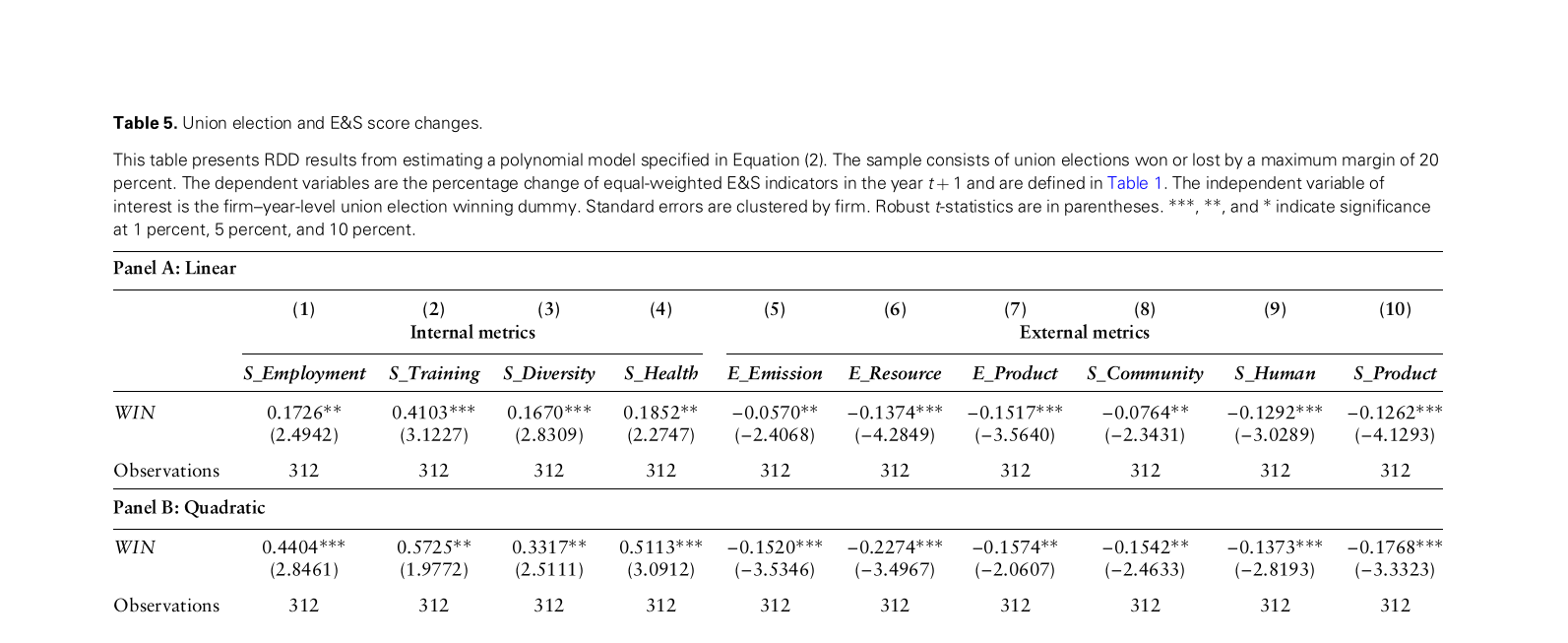
Table 5: Union elections and changes in internal and external E&S scores
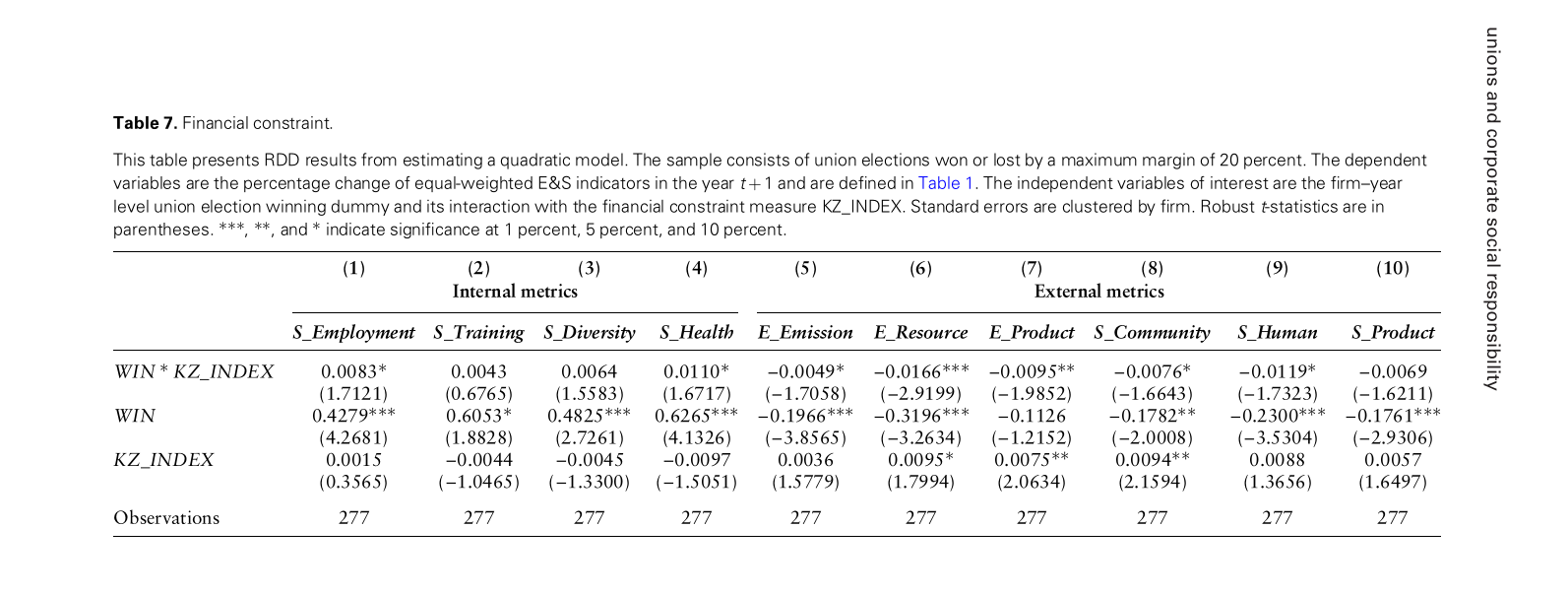
Table 7: Financial constraints and the allocation of E&S performance
Political Connections, Financial Constraints, and Corporate Taxation
We argue that the greater tax planning of politically connected firms depends critically on firms' financial conditions. After a plausibly exogenous increase in political connections, financially unconstrained firms increase their tax planning while constrained firms decrease it, as they obtain new external debt financing at lower costs.
Research Design
We examine how political connections interact with financial constraints to shape corporate tax planning. Our identification strategy exploits plausibly exogenous increases in firms' political connections using close congressional elections. We measure tax planning using both GAAP and cash effective tax rates (ETRs), book-tax differences, and discretionary permanent differences. Financial constraints are measured using the KZ Index, the SA Index, and firm size and payout policy. The sample combines Compustat financial data with Federal Election Committee (FEC) contribution records covering multiple election cycles.
Key Results
After an exogenous increase in political connections, financially unconstrained firms significantly increase their tax planning activities and achieve lower effective tax rates. In contrast, financially constrained connected firms decrease their tax planning. The mechanism is that politically connected constrained firms obtain new external debt financing at lower costs following the connection increase, reducing their reliance on internal funds and thus diminishing the marginal benefit of tax savings. This finding reveals a nuanced relationship: the value of political connections for tax purposes is conditional on firms' access to alternative financing channels. The results are robust to alternative proxies for tax planning and financial constraints, as well as placebo tests and alternative identification strategies.
Key Figures & Tables
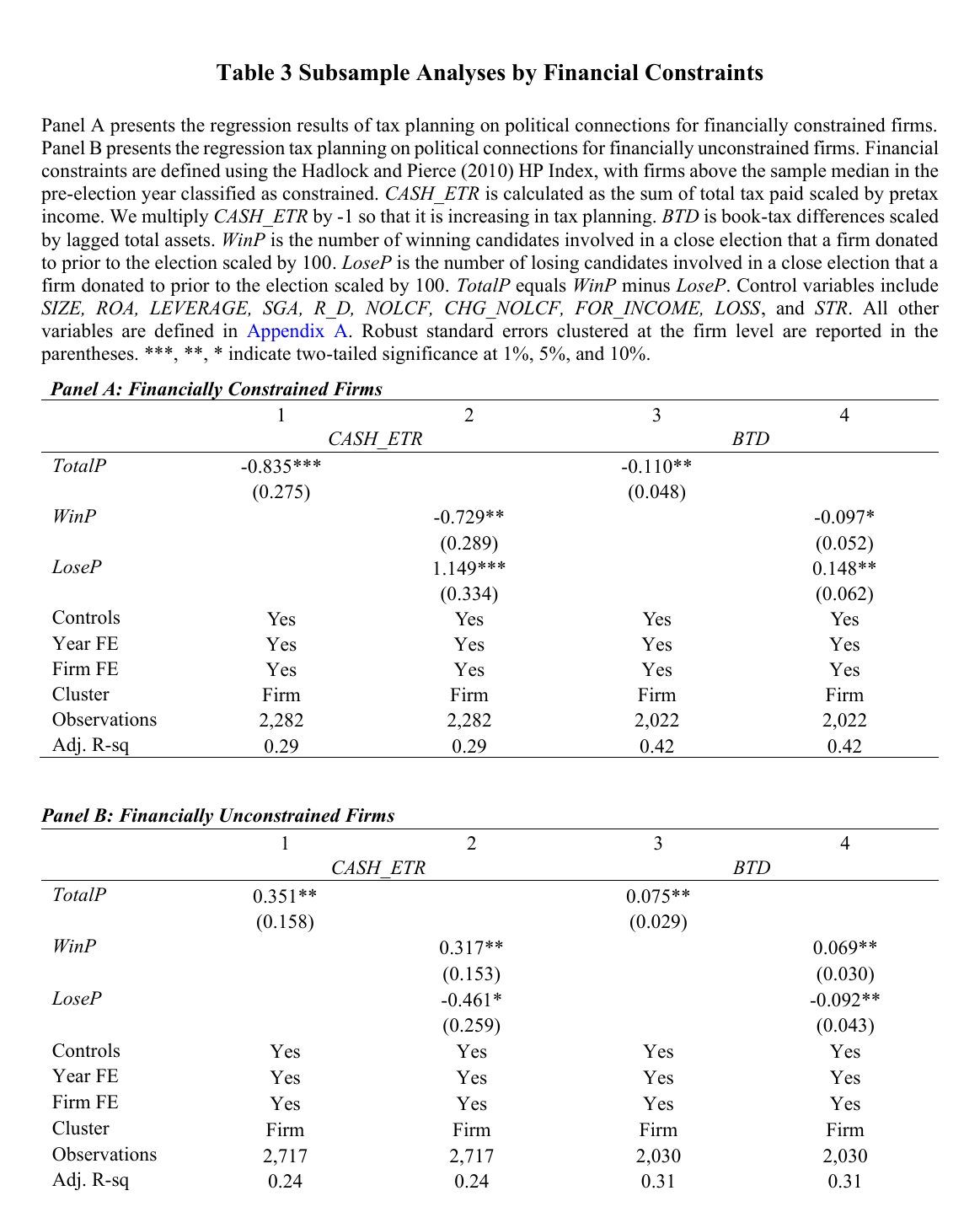
Table 3: Political connections and tax planning by financial constraints
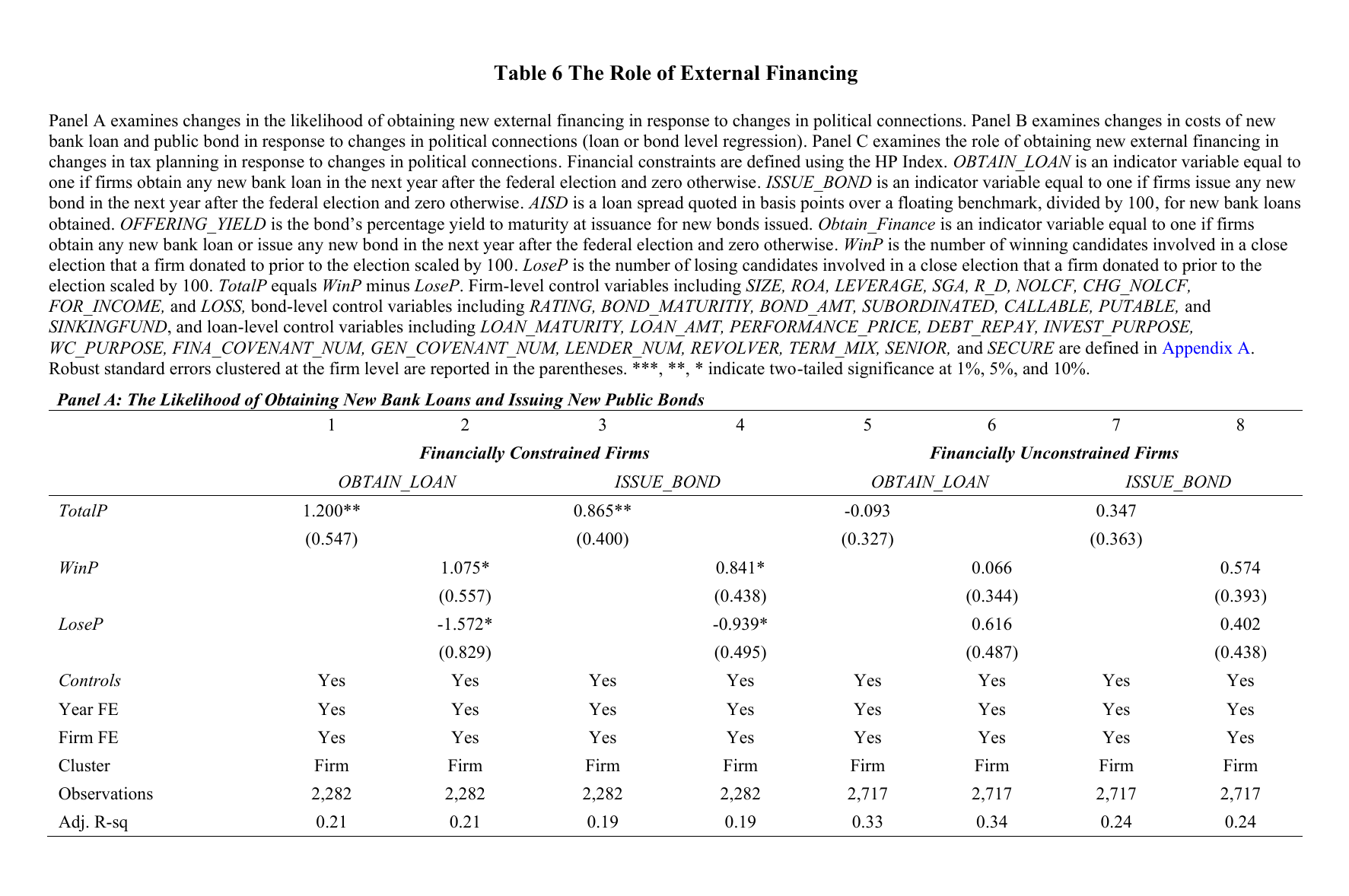
Table 6: External financing as the underlying mechanism
Working Papers
Insider Trading Reforms and Corporate Transparency: Evidence from the STOCK Act
We examine how insider trading restrictions on government officials affect corporate transparency. Using the 2012 STOCK Act, we find that firms with significant government contracts reduced the frequency and precision of management forecasts, experienced declines in price informativeness, and increases in implied cost of capital.
Research Design
We implement a difference-in-differences design comparing firms with significant government contracts to those without, before and after the 2012 STOCK Act. Treated firms are those reporting at least 10% of revenue from government contracts in at least three of the four years preceding the Act. We trace effects across three layers: (1) managerial disclosure (management forecast frequency and precision), (2) private information production (analyst forecast accuracy and dispersion), and (3) market information incorporation (price informativeness, price delay, and implied cost of capital). To reinforce causal identification, we replicate our analyses using two regression discontinuity designs: close general elections and unanticipated special elections. We also analyze conference call transcripts to track changes in firms' discussions of government contracting and policy risk. Robustness tests include the Oster (2019) coefficient stability test, propensity score matching, entropy balancing, and placebo tests.
Key Results
Post-STOCK Act, firms with substantial government contracts experienced a 7.5% decline in management forecast frequency, accompanied by an 8.6% increase in the likelihood of issuing range (rather than point) forecasts. The pullback in disclosure was concentrated among firms with stronger government ties: those heavily reliant on government sales, those with major government customers, and politically connected firms. Conference call analysis confirms that affected firms reduced discussions of procurement-related topics while increasing discussions of regulatory and policy risk. Analyst forecast errors increased significantly, while forecast dispersion decreased — suggesting herding or shared dependence on weaker public signals. Price informativeness declined, price delay increased, and the implied cost of capital rose for affected firms. These effects are robust when controlling for time-varying federal regulatory exposure using text-based measures. The results reveal an unintended consequence of insider trading enforcement: restricting informal access to policy-relevant insights can inadvertently impair the market's ability to incorporate firm-specific information into prices.
Key Figures & Tables
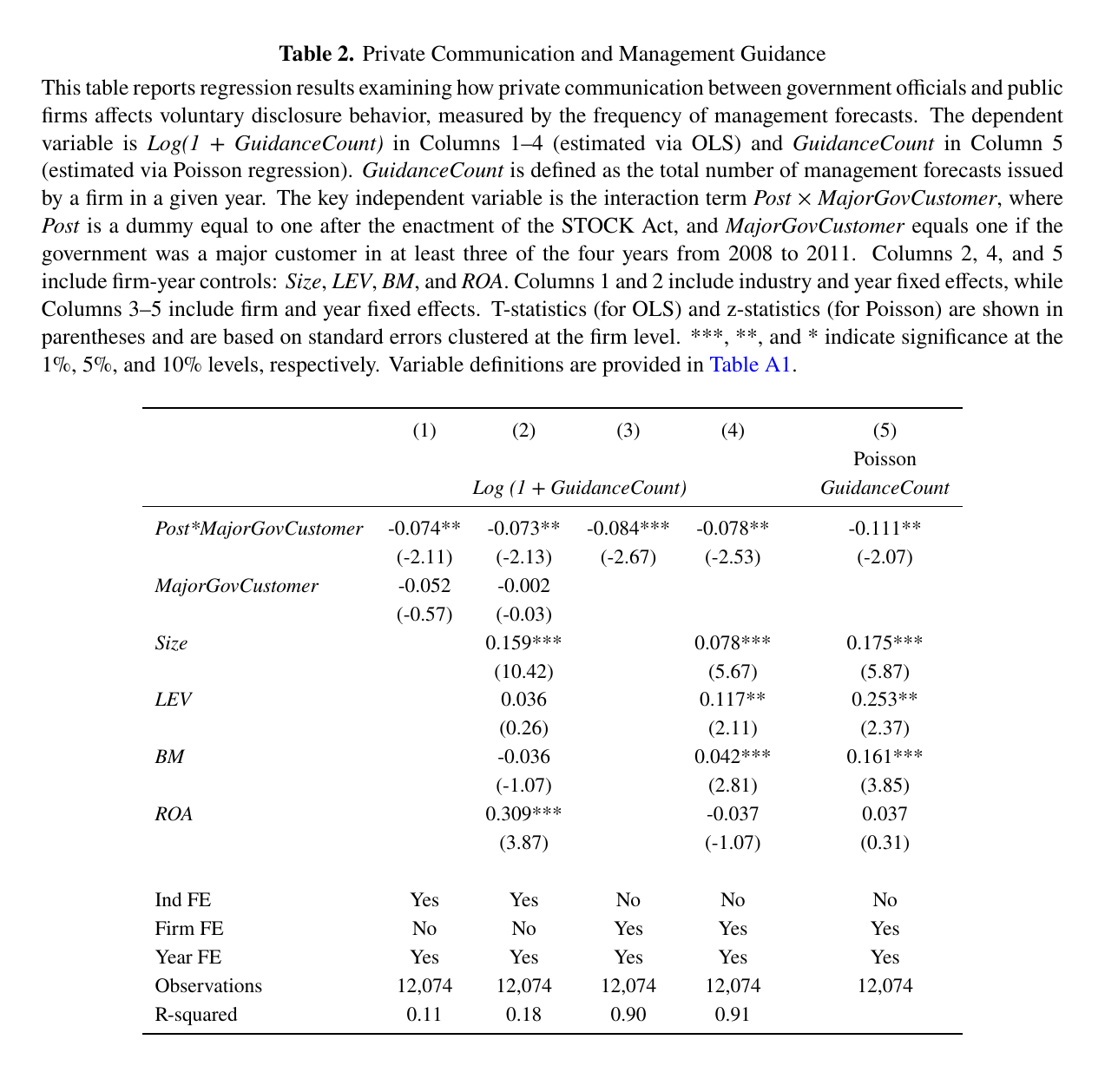
Table 2: The STOCK Act and management guidance
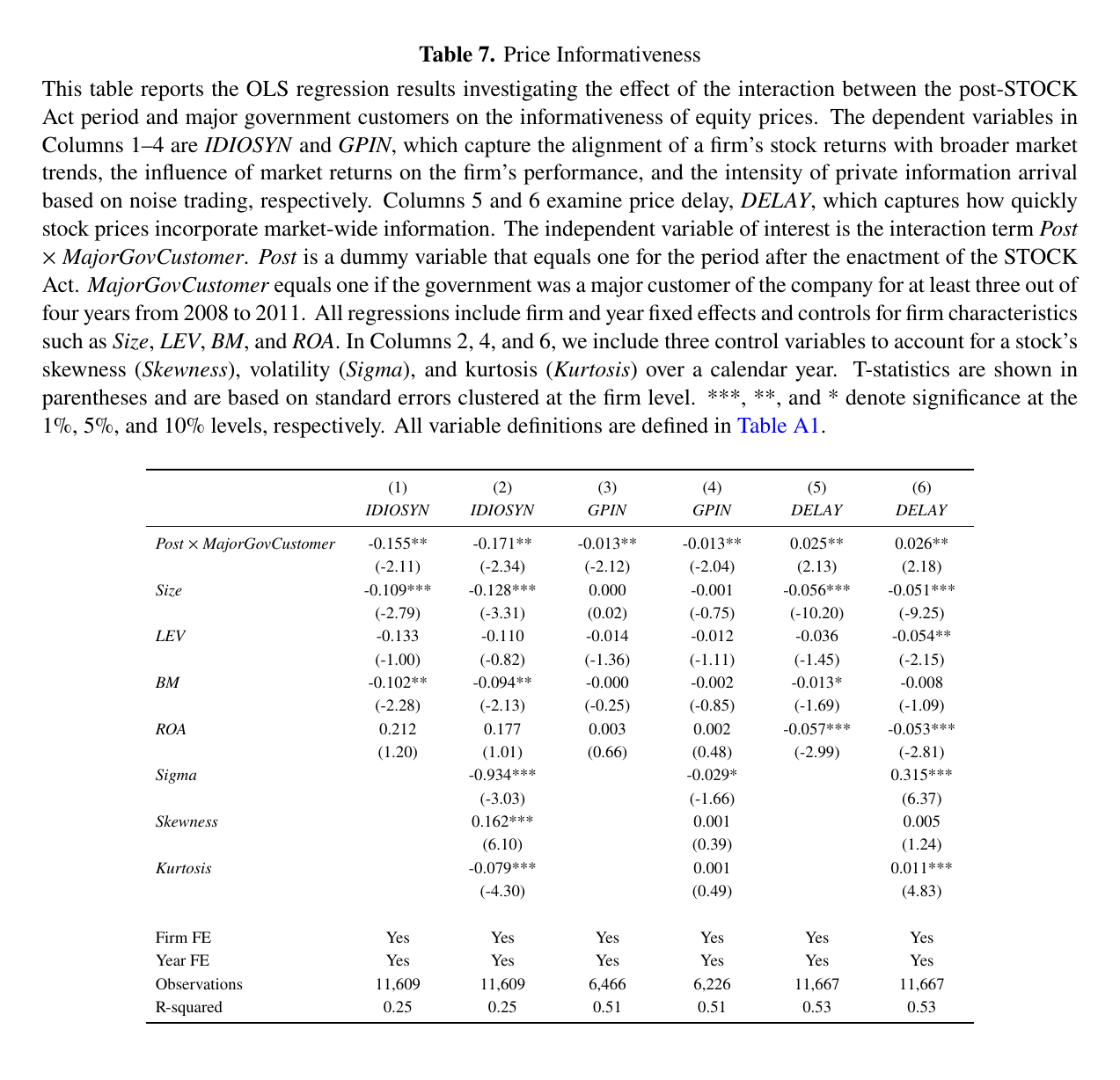
Table 7: The STOCK Act and price informativeness